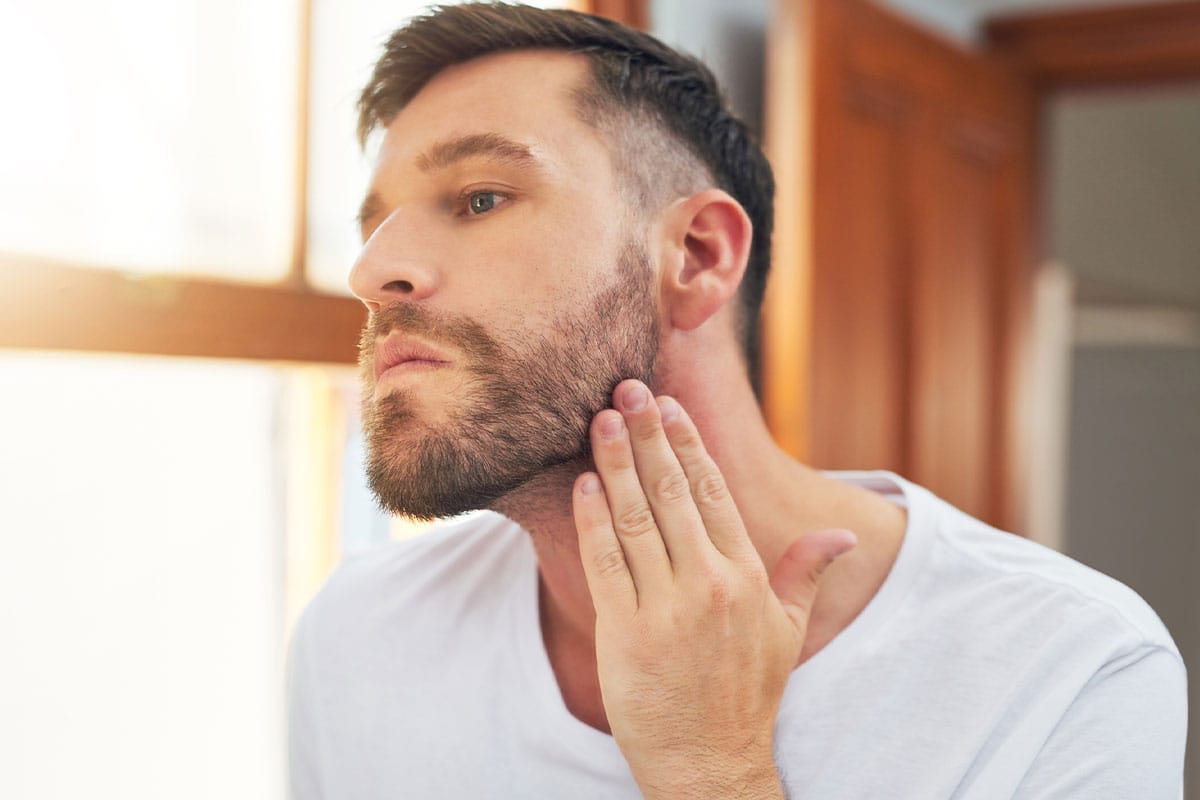
You may have tried letting your beard grow for months, only to end up with patchy cheeks, thin sideburns, or a beard that never fully connects. Maybe genetics, scarring, hormones, or uneven growth keep your facial hair from truly growing fully. The only permanent and natural-looking way to achieve dense beard growth is through a beard transplant.
Under the care of Dr. Anthony Bared, our double board-certified facial plastic surgeon in Miami, beard transplantation is approached with technical precision and an artistic eye. Before deciding if this procedure is right for you, there are several important things you should understand.
What Exactly is a Beard Transplant?
A beard transplant is a cosmetic surgical procedure that aims to restore or enhance facial hair by relocating healthy hair follicles from a donor area of your body, most commonly the back or sides of the scalp, to areas of the face where hair is sparse or absent. These follicles are your own, which allows the transplanted hair to grow naturally once it takes hold.
The goal is to recreate realistic growth patterns that match the direction, angle, and density of a natural beard. When performed properly, transplanted facial hair blends seamlessly with existing hair, allowing you to grow, trim, and shave your beard just as you normally would.
Where Does the Donor Hair Come From, and Why Does It Matter?
Donor hair selection is a critical factor in achieving a natural result. In most cases, hair is taken from the back or sides of your scalp because these areas tend to have stable growth. The texture of scalp hair also makes it a reliable option for facial transplantation.
Using your own hair is essential, as hair from another person would be rejected by your immune system. In certain situations, such as limited scalp donor supply, hair may be harvested from other areas of the body, but this decision is made carefully to ensure the best possible match.

Which Transplant Techniques Are Used for Beard Restoration?
Beard transplants use one of two proven techniques: follicular unit extraction (FUE) or follicular unit transplantation (FUT). With FUE, individual hair follicles are removed one by one using a specialized punch tool, leaving small, dot-like scars that are difficult to detect. FUT involves removing a thin strip of tissue from the donor area, which results in a linear scar that is typically concealed by surrounding hair.
Both techniques can produce excellent results when performed by an experienced surgeon. The choice depends on your goals, donor hair characteristics, and preferences. During your consultation, the technique best suited to your anatomy will be discussed in detail.
What Should You Expect During and After the Procedure?
A beard transplant is an outpatient procedure, meaning you go home the same day. You’ll remain awake throughout the surgery, though local anesthesia is used to keep you comfortable, and an oral sedative may be offered if you feel anxious. The procedure can last several hours, depending on how many grafts are needed.
After surgery, mild swelling, redness, or tightness is common. You’ll need to avoid washing your face for several days to protect the grafts and limit strenuous activity during the early healing phase. Transplanted hairs often shed within the first few weeks. New growth typically begins around four to six months, with fuller results developing over the course of the first year.
Who is a Good Candidate for a Beard Transplant?
You may be a good candidate if you want a fuller or more defined beard and have enough healthy donor hair to support the procedure. Good overall health is also important, as uncontrolled medical conditions can increase surgical risks.
It’s equally important to examine your motivations. A beard transplant can significantly enhance your appearance and confidence, but results take time and require patience. You must understand that you won’t leave surgery with an instant beard.
Are the Results Truly Permanent and Customizable?
Yes, once transplanted hair follicles establish a blood supply and begin growing, the results are considered permanent. You can style, trim, or shave your beard however you like, much like you would with your beard. The design is highly customizable, allowing you to create anything from subtle density improvements to a full beard, mustache, or goatee.
Because facial hair restoration requires attention to detail and facial harmony, working with a surgeon who understands both structure and aesthetics is essential. Dr. Bared combines his advanced hair restoration techniques with his background in facial plastic surgery to produce natural, undetectable results tailored to each patient’s features and goals.
If you’re considering a beard transplant, understanding these key points can help you make an informed decision. If you’re ready to take the next step toward a dense, luscious beard, please schedule a personalized consultation with Dr. Bared to explore your options.