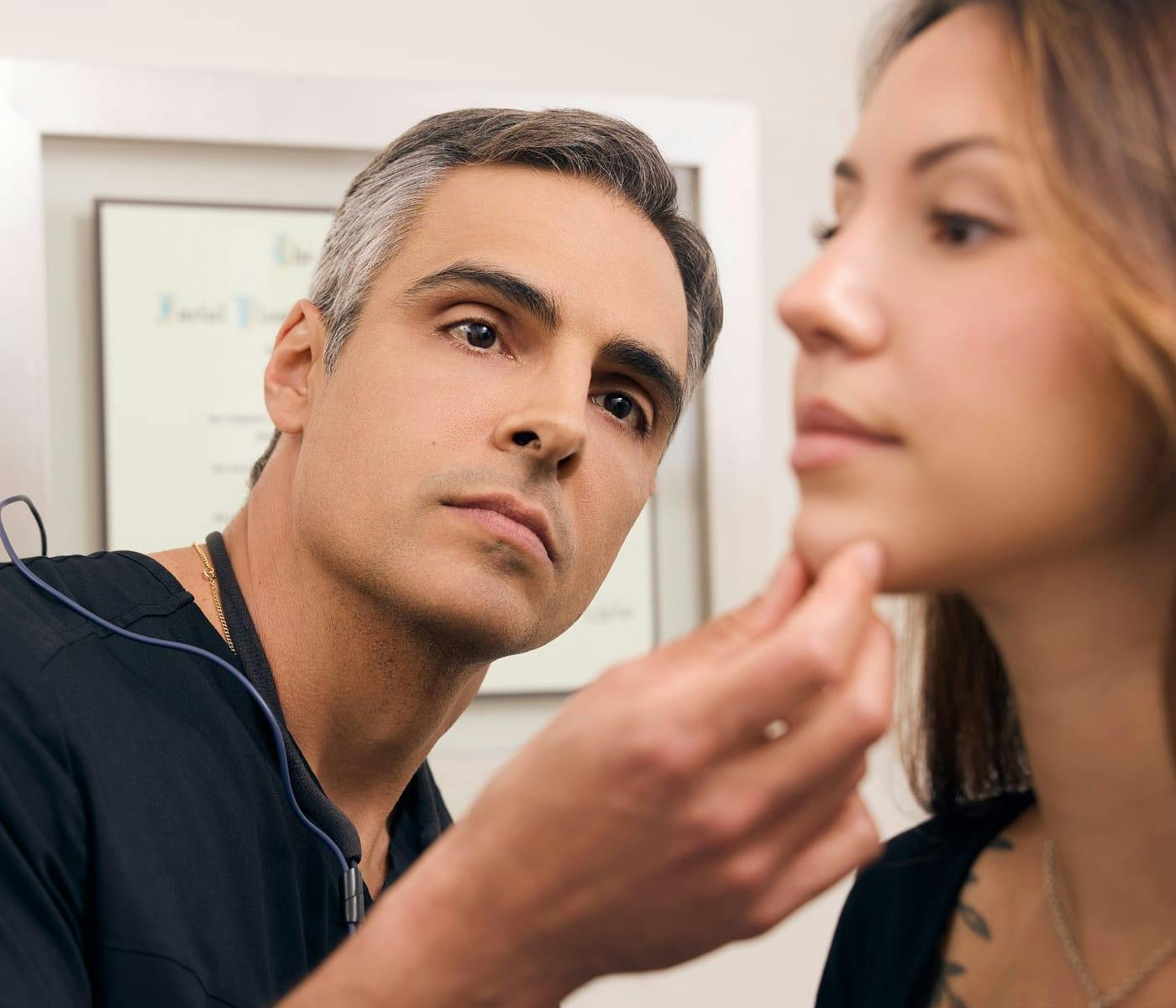
Enhance Facial Balance While Preserving Identity
Ethnic rhinoplasty is a specialized form of nose surgery that refines the shape, structure, or function of the nose while preserving a patient’s unique features. Rather than applying a one-size-fits-all approach, this procedure considers cultural anatomy, skin thickness, cartilage strength, and facial proportions. With ethnic rhinoplasty, the goal is to improve nasal balance, symmetry, or breathing concerns without erasing the characteristics that reflect your heritage, resulting in natural-looking outcomes that complement the rest of your face.
Professional affiliations & contributions

Ethnic Rhinoplasty Treats:
- A wide or flat nasal bridge that disrupts overall facial balance
- Flared or enlarged nostrils that draw attention away from other features
- A bulbous, under-projected, or undefined nasal tip
- Asymmetry of the nose caused by genetics or prior injury
- Structural concerns affecting breathing or airflow
- Disproportion between the nose and other facial features


Types of Ethnic Rhinoplasty
African American Rhinoplasty
African American rhinoplasty refines the nose while preserving culturally distinctive features, such as a wider nasal base, flared nostrils, a softer bridge, or a rounder tip. The approach often emphasizes structural support and subtle contouring rather than aggressive reduction.
Hispanic Rhinoplasty
Hispanic rhinoplasty addresses a wide range of nasal characteristics, often combining elements of both reduction and refinement. Treatment may focus on narrowing the nasal bridge, refining the tip, or correcting asymmetry while respecting individual proportions.
Indian Rhinoplasty
Indian rhinoplasty often involves refining bridge width, enhancing tip definition, or improving projection while respecting thick skin and strong nasal structures. The procedure is customized to create subtle improvements that maintain ethnic authenticity.
Asian Rhinoplasty
Asian rhinoplasty centers on augmentation rather than reduction. Many patients seek to improve bridge height, enhance tip projection, or refine the nostrils while maintaining their ethnic identity. Techniques used may involve cartilage grafting or improving structural support.
Middle Eastern Rhinoplasty
Middle Eastern rhinoplasty frequently targets a prominent dorsal hump, drooping tip, or nasal length while preserving strong features. The surgical plan prioritizes balance and refinement rather than over-reduction, allowing the nose to harmonize with facial structures.

Call today to schedule your consultation
Discover the Benefits of Ethnic Rhinoplasty
Preserve Cultural Identity
This approach refines the nose without erasing the features that reflect your heritage. Surgical planning accounts for skin thickness, cartilage structure, and facial proportions to ensure improvements look natural, authentic, and harmonious with the rest of your face.
Highly Personalized Results
Ethnic rhinoplasty is never one-size-fits-all. Each procedure is tailored to your anatomy, goals, and aesthetic preferences. This allows precise adjustments to the bridge, the tip, or the nostrils, ensuring the final result complements your unique facial structure.
Improve Appearance and Function
In addition to cosmetic refinement, ethnic rhinoplasty can correct structural issues that affect breathing or airflow. Addressing internal nasal support alongside external shape can lead to better nasal function and long-term satisfaction with form and function.
Ethnic Rhinoplasty FAQs
Ethnic rhinoplasty is performed strategically to preserve your cultural identity, not erase it. The procedure focuses on refinement rather than transformation. Your surgeon evaluates your facial proportions, skin thickness, and nasal structure to ensure the result still reflects your heritage while appearing more balanced and harmonious.
Unlike traditional rhinoplasty, ethnic rhinoplasty does not rely on a standard aesthetic ideal. Instead, it accounts for your individual ethnic anatomy and cultural features. Your treatment plan is customized to enhance your nose in a way that complements your facial structure and the key markers of your heritage, rather than forcing it to conform to a single universal look.
Yes. While many patients seek ethnic rhinoplasty for cosmetic reasons, it can also correct functional issues such as a deviated septum or weak nasal support. Improving internal nasal structure can enhance airflow, making it easier for you to breathe.
Why Choose Dr. Anthony Bared

- Dr. Bared’s training was first in Otolaryngology at the University of Miami, followed by the awarding of a highly competitive fellowship by the American Academy of Facial Plastic and Reconstructive Surgery at the University of Illinois-Chicago.
- He is Double Board Certified by the American Board of Facial Plastic and Reconstructive Surgery and the American Board of Otolaryngology.
- Dr. Bared has numerous publications and has lectured at various nationwide scientific meetings.
- He also serves as a clinical voluntary Assistant Professor at the Florida International University, Herbert Wertheim College of Medicine.
- Dr. Bared is a recognized provider of the Foundation Aesthetic Hair Restoration Method. He uses his surgical skills and artistic instincts to offer advanced techniques that ensure natural and transformative results in beard and hair transplants.
Meet Dr. Bared: Your Ethnic Rhinoplasty Expert
Dr. Anthony Bared is a dual board-certified facial plastic and reconstructive surgeon with extensive experience performing ethnic rhinoplasty for patients of diverse backgrounds. As a specialist in facial anatomy, Dr. Bared understands how nasal structure, skin thickness, and facial proportions vary across ethnicities, and how to refine the nose without compromising cultural identity. He supports natural-looking results that align with each patient’s features.
Dr. Bared is known for his individualized treatment planning and meticulous surgical technique. Rather than following a single aesthetic standard, he tailors every procedure to your goals while preserving what makes you look like you. If you’re considering ethnic rhinoplasty and want results that feel authentic, schedule a consultation with Dr. Bared to discuss your options.
Last modified by Dr. Anthony Bared