
Most patients who sit down across from me asking about their eyebrows have already been told this is "just a small hair transplant," and they show up expecting the same operation an uncle had on his crown. It isn't.
Eyebrow transplantation technically shares its donor source with scalp work and almost nothing else: the grafts must be dissected down to single hairs, set at roughly 10 to 15 degrees off the skin surface rather than the 30 to 45 degrees at which scalp hair exits, and aimed in several different directions across a single brow. Same biology. Different operation, different instruments, different definition of success.
Why Eyebrow Transplantation Technically Differs
Eyebrow transplantation is a follicular grafting procedure that rebuilds brow shape and direction using single scalp hairs laid nearly flush with the skin, rather than restoring bulk density the way scalp surgery does. On the scalp I am managing coverage across a broad, curved, forgiving surface where hair stands up and away from skin and neighboring hairs hide small errors.
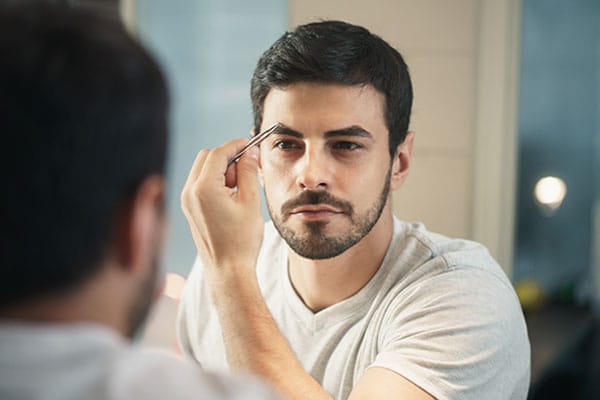
The brow gives me none of that. It's a strip of skin a few centimeters long sitting directly above the orbital rim, read by every person the patient talks to, at conversational distance, in daylight.
At Dr. Anthony Bared Facial Plastic Surgery, the brow cases get planned the way I plan a nasal tip: as a shape problem with a hair supply attached, not a hair problem with a shape attached.
Scalp hairs placed in follicular units of one to four hairs are standard practice above the hairline. In a brow, a three-hair unit is a visible clump from four feet away.
Who Is a Candidate for Brow Restoration?
The strongest candidates are patients with stable, non-inflammatory brow loss: years of over-plucking, a laceration or burn scar through the brow, traction thinning, or congenitally sparse brows that makeup has been covering since high school. Thyroid-related thinning of the lateral brow can respond to medical management, so I want that worked up and settled before I harvest anything. Active alopecia areata gets a dermatology opinion first, and I will wait.
Microblading patients are their own category. Pigment under the skin doesn't prevent grafting, and I can usually work around tattooed outlines, though the drawn shape is sometimes not the shape the patient's orbital rim actually wants.
Donor selection is the quiet decision here. I am looking for the finest-caliber hair available, which usually means low occipital or postauricular scalp rather than the crown. Coarse crown hair in a brow looks like exactly what it is. More on the hair restoration side of my practice if scalp thinning is the bigger issue.
Hair Caliber and Direction Decide Everything
Caliber and angle determine whether a brow looks real. Graft count barely registers by comparison, and I say that to every patient who comes in having already read a number off a website.
A brow built from 200-some well-angled single hairs of fine donor hair reads as natural. A brow built from twice that in coarse hair standing a few degrees too proud reads as hair glued to a face.
If I have to choose between fifty more grafts and five degrees of better angle, I take the angle every time.
I will admit I go back and forth on nape hair as a donor. It's finer, and the curl behaves nicely in the medial brow, but the growth cycle is less predictable than occipital hair, and I have had results I liked less than I expected.
Some surgeons I respect use it routinely. I use it selectively, mostly for the brow head, and I am not certain I am right about that. The honest position is that my preference here is a preference, not a rule.
What Eyebrow Transplantation Technically Requires
Graft preparation is the single biggest technical divergence from scalp surgery, and it happens before a recipient site is ever made. Multi-hair follicular units harvested from the donor zone get divided under stereo-microscopic magnification into individual single-hair micro-grafts, with excess epidermis, dermis, and fat trimmed away so each graft can lie almost flush against the skin.
That trimming isn't cosmetic fussiness. Fat left on a graft lifts the hair shaft off the surface, and a lifted shaft at the brow is a wrong angle by definition.
Recipient sites get made with very small instruments, in the 20 to 22 gauge range, which lets the graft sit shallow and nearly parallel to the skin. I favor the finer end, a 22-gauge, through the brow body. Except in scar tissue, where the dermis is stiff, and a slightly larger site places more cleanly without crushing the graft.
One case from last year: a patient with brow tail loss from a laceration, roughly a centimeter of mature scar running through the lateral third. Scar beds carry less blood supply, so I deliberately planted that zone sparser than the surrounding brow and reserved a second pass rather than forcing density into compromised tissue.
Single hairs were dissected from a low occipital donor strip under magnification, defatted, and placed through 22-gauge sites angled almost parallel at the tail. At twelve months, the tail held enough hair that she stopped penciling it, and I discussed a small touch-up through the scar itself.
Clinics that run brows on scalp protocols, two- and three-hair grafts placed fast because the room is booked, are producing tufts. That isn't density. That's a cluster of hairs sharing one exit point, which no eyebrow has ever done.
Mapping the Brow Head and Tail
Four directions in one brow. The medial head grows largely upward, the central body transitions toward horizontal, the lateral segment runs horizontally out toward the tail, and along the upper and lower borders the hairs converge in a feather-like pattern that gives the brow its edge definition.
Scalp transplantation doesn't ask for this. Scalp hair gets a dominant direction and a whorl, and the rest follows.
I will say this: the medial brow is where I slow down the most, and it is the part patients never ask about. They ask about the arch. The head of the brow is what makes a result believable, because it is the only segment where hairs point at the ceiling, and getting it wrong is the signature of a transplanted brow.
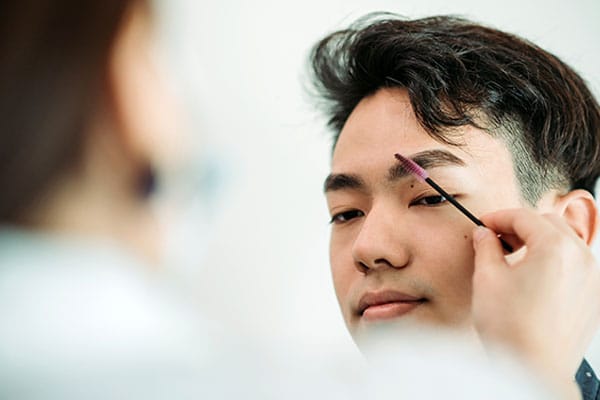
Each recipient site has to be made at the angle and direction the final hair will take, because the site dictates the hair, not the graft. I mark direction changes on the skin before any local anesthetic goes in, since infiltration distorts the surface anatomy I am reading. Then I work in segments rather than filling left to right.
Eyebrow vs Scalp Hair: By the Numbers
The measurable differences between brow and scalp grafting are large enough to change instruments, not just technique.
Parameter | Eyebrow | Scalp
- Hair exit angle from skin | about 10 to 15 degrees | about 30 to 45 degrees
- Graft composition | single-hair micro-grafts | follicular units of 1 to 4 hairs
- Active growth (anagen) phase | roughly 30 to 45 days, up to a few months | about 2 to 7 years
- Recipient site instrument | 20 to 22 gauge needles | larger blades or punches
- Graft preparation | stereo-microscopic dissection, excess tissue removed | standard follicular unit handling
All of the above reflects published technical and growth-cycle data on brow versus scalp hair. The anagen difference is the one with the longest practical tail: a native eyebrow hair stops growing in about six weeks, while transplanted scalp hair carries its multi-year growth program with it into the brow.
How Long Does Brow Healing Take?
Crusting at the recipient sites for about a week. Small, pinpoint, hideable with how you wear your hair if you have bangs, not hideable otherwise. Donor site stays covered by hair the whole time. Transplanted hairs shed somewhere in the first month. Also normal, and it still rattles people.
New growth starts coming in around the third or fourth month, and the brow keeps filling and thickening through roughly the first year.
The worst thing a patient does in the second week is pick at the crusts. Picking pulls grafts. Not "might." Does.
Do Transplanted Brows Need Trimming?
Yes, permanently, and that's the trade-off nobody mentions in a glossy before-and-after. Transplanted scalp hairs keep the growth behavior of their origin, and since scalp anagen runs years rather than the roughly 30 to 45 days of native brow hair, those hairs will grow past brow length instead of stopping where a native hair would.
That means trimming with small scissors every week or two for life, and occasional brushing or a brow gel to keep the medial hairs pointed up. Patients who aren't willing to do that shouldn't have this operation. The grafts are permanent in the same way a scalp transplant is permanent: the follicles are yours, they're living in a new neighborhood, and they behave accordingly.
Avoiding the Doll-Hair Look
Doll hair is an angle problem and a graft-size problem, almost never a density problem. The directional mapping described earlier is what prevents it: single hairs, placed at shallow exit angles, with direction changing across the brow instead of marching in one uniform line. When every hair in a brow points the same way at the same pitch, the eye reads it as artificial instantly, even if the shape and color are perfect.
I also under-build on purpose at the head and the upper border. Native brows are sparser there than people think, and the instinct to fill every gap is what produces that drawn-on density.
One more thing, and I forget to say it until patients bring photos. The brow shape in the photo usually belongs to someone with a different orbital rim.
I design to the patient's bone, not to a reference image. I have declined cases where the requested arch would have sat a full centimeter above where the patient's own anatomy supports it.
Why a Facial Surgeon, Not a Hair Mill
A brow is a facial feature, which is why I treat this as facial aesthetic surgery that happens to use hair grafts. I am double board-certified by the American Board of Facial Plastic and Reconstructive Surgery and the American Board of Otolaryngology, completed fellowship training in facial plastic surgery at the University of Illinois-Chicago, and serve as Clinical Voluntary Assistant Professor at Florida International University Herbert Wertheim College of Medicine, with 26 or more peer-reviewed publications.
My hair restoration work follows the Foundation Aesthetic Hair Restoration Method developed with Dr. Jeffrey Epstein. You can verify facial plastic surgery certification directly through the American Board of Facial Plastic and Reconstructive Surgery.
I am not going to argue FUE versus strip harvesting here, because a brow needs so few grafts that the donor method rarely changes the aesthetic result.
What to ask before you book anywhere:
Who dissects the grafts, and are they prepared as single hairs under magnification? What instrument makes the recipient sites, and at what angle?
Will the brow case be scheduled on its own, or slotted between two scalp cases? Brows take microscope time, and they cannot be rushed to make a room turn over. How many brow cases specifically, not scalp cases, has the surgeon done?
More detail on technique lives on my eyebrow transplant page, and my background is here.
Booking a Brow Assessment in Miami
If you want a dramatically fuller brow by next month, I am not the right surgeon. Growth takes most of a year, and the hairs need trimming forever.
If that sounds workable, come see me at Dr. Anthony Bared Facial Plastic Surgery in Miami, FL, and I will do a brow design assessment: donor hair caliber, orbital rim shape, direction mapping, and an honest answer on whether your anatomy supports the shape you want. Request a consultation, and we will put you on the schedule.
Frequently Asked Questions
Why do eyebrow transplants require single-hair grafts instead of the follicular units used in scalp surgery?
Eyebrow transplants require single-hair grafts because natural eyebrow hairs exit the skin individually, and placing even a two- or three-hair follicular unit creates a visible tuft at conversational distance. On the scalp, multi-hair units are standard because density and coverage are the goals and neighboring hairs conceal small imperfections. In the brow, every exit point is exposed and read at close range, so each graft must replicate the single-hair architecture the brow actually has.
What angle are eyebrow grafts placed at, and why does it differ from scalp hair transplantation?
Eyebrow grafts are placed at roughly 10 to 15 degrees off the skin surface, nearly parallel to the skin, compared to the 30 to 45 degrees typical in scalp hair transplantation. The difference is not stylistic: a shaft angled even slightly too upright reads as artificial because natural brow hairs lie almost flush against the skin. Excess fat left on a graft physically lifts the shaft and creates the same wrong angle, which is why microscopic defatting before placement is a functional requirement, not a finishing detail.
Can eyebrow transplantation work if you have scar tissue in the brow from a laceration or burn?
Eyebrow transplantation can restore hair through scar tissue, but the technique requires deliberate adjustments because scar tissue carries reduced blood supply compared to normal skin. A surgeon placing grafts into a scarred brow should intentionally underfill that zone in the first session and plan a second pass once initial grafts have established, rather than forcing full density into compromised tissue at once. Stiff scar dermis also typically requires a slightly larger recipient site instrument so grafts seat cleanly without being crushed during placement.
Does hair caliber matter more than graft count for a natural-looking eyebrow transplant result?
Hair caliber and placement angle determine whether an eyebrow transplant looks natural far more than total graft count. Fine-caliber donor hair, typically harvested from the low occipital or postauricular scalp rather than the coarser crown region, lies flat and mimics native brow texture. Coarse hair placed in larger numbers will still read as artificial because the shaft diameter is visually inconsistent with the surrounding brow, regardless of how precisely it is angled or how many grafts are used.
How is the transplanted hair directed across the brow, and is there one angle for the whole brow?
A natural eyebrow requires grafts placed in at least four distinct directional zones across a single brow, not one uniform angle. The medial head grows predominantly upward, the central body transitions toward horizontal, the lateral segment runs horizontally toward the tail, and hairs along the upper and lower borders converge inward to create the feathered edge definition that gives the brow its outline. Replicating this directional map is one of the primary reasons eyebrow transplantation demands a different planning approach than scalp restoration, where a dominant direction and a natural whorl account for most of the design work.
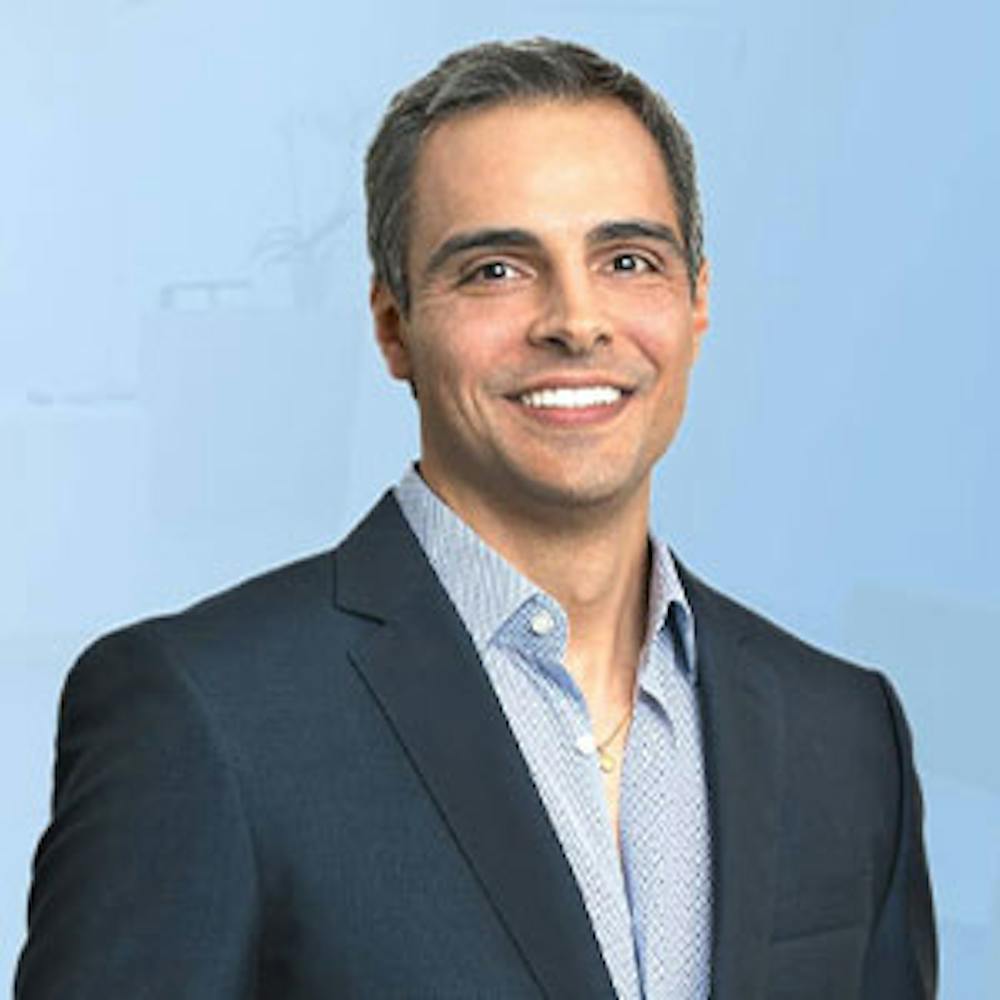
Written by: Dr. Anthony Bared
Double board-certified in facial plastic and reconstructive surgery and otolaryngology; University of Miami-trained and fellowship-trained, with a practice limited exclusively to the face.
About Dr. Bared