Discover the Benefits of African American Rhinoplasty

African American rhinoplasty in Miami is carefully honed by experts like Dr. Anthony Bared offers an approach that respects and enhances unique ethnic heritage. Tailored to individual needs, it not only refines the nose’s shape but also maintains the distinct characteristics that define cultural beauty.

Cultural Respect

This procedure ensures that individuality shines, celebrating the beauty of African American features without compromising authenticity.

Individualized Enhancement

Dr. Bared’s expertise ensures that every rhinoplasty is personalized, giving a harmonious balance to facial features.

Boosted Confidence

Beyond the physical transformation, African American rhinoplasty instills newfound self-assurance, allowing you to put your best face forward.

curly haired woman

Preserving Ethnic Identity Through Rhinoplasty

In recent years, the number of African American patients seeking nose surgery has increased dramatically. Today, more patients of African ethnicity are interested in the potential refinements of a rhinoplasty procedure while wanting to maintain their distinct ethnic features. Dr. Bared’s main objective in rhinoplasty is to provide natural results that achieve the patient’s aesthetic goals.

After spending years working with Hispanic patients, Middle Eastern patients, Indian patients, Caucasian patients, and people of many different ethnicities, Dr. Bared has cultivated a deep understanding of how to address nasal concerns while preserving the patient’s unique heritage. Regardless of the patient’s race, Dr. Bared tailors each ethnic rhinoplasty to perfectly blend with the patient’s overall facial features and align with their specific cosmetic objectives.


Reviews media

The African American Nose: Features and Characteristics

The nose is an essential facial attribute that is often the first thing people observe about another person. It can also symbolize a part of their ethnic background or cultural background, as well as a feature that ties generations together. While noses come in all unique shapes and sizes, African noses are broader and wider than those of other ethnic groups. Additionally, they usually have flared nostrils, rounder tips, and a slight, flat nasal bridge.

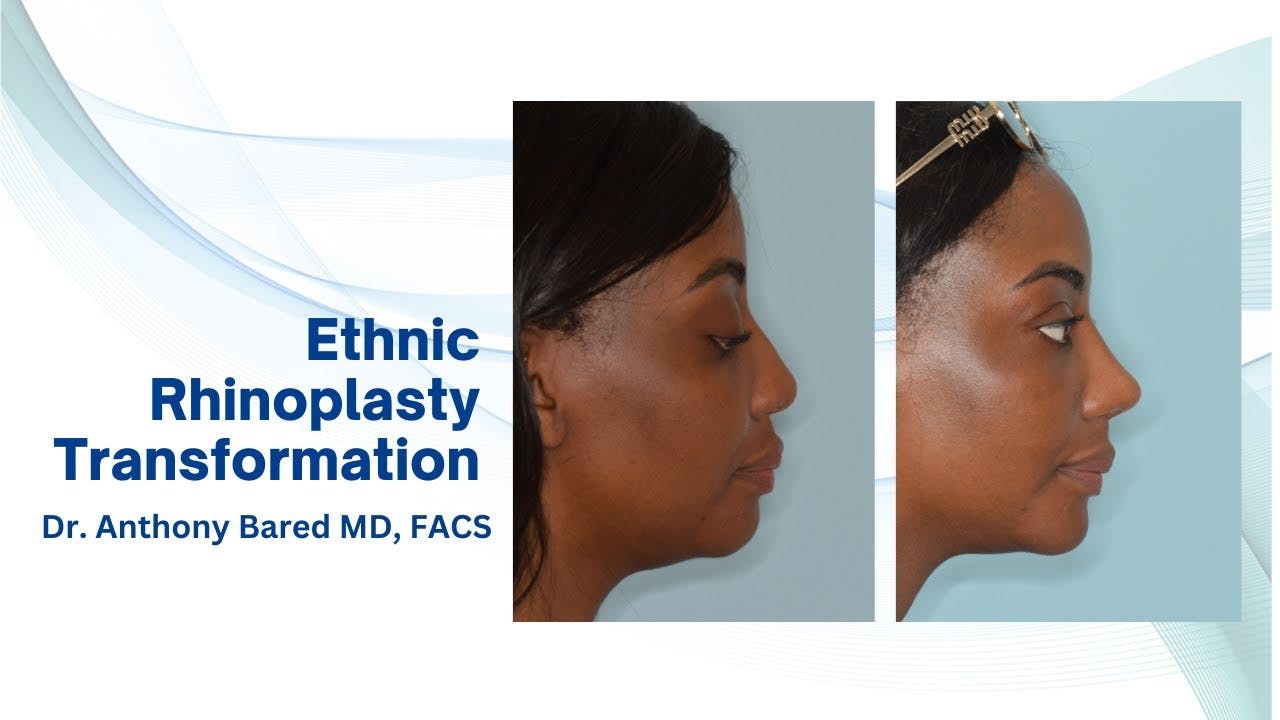
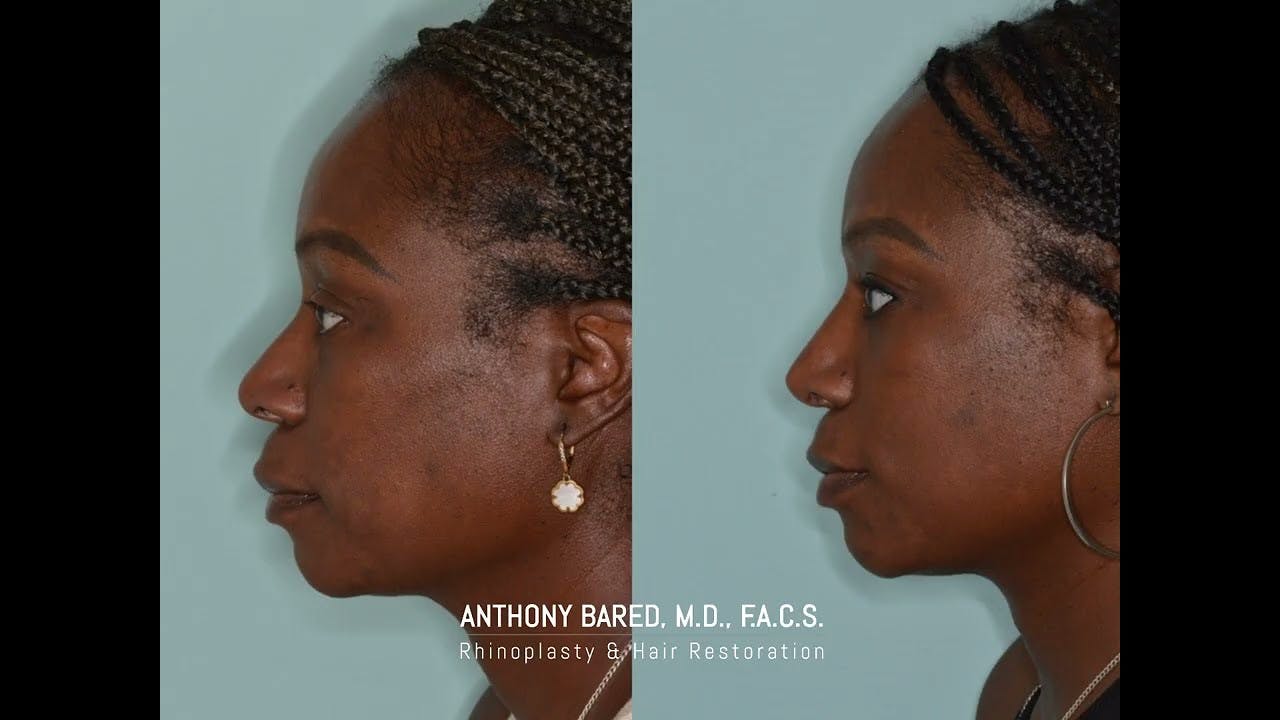
An African American nose job is a plastic surgery procedure that addresses cosmetic or functional nasal concerns, like a wide bridge or flared nostrils, while respecting the African American patient’s family heritage. As with traditional or other ethnic rhinoplasty procedures (Asian rhinoplasty, Caucasian rhinoplasty, Middle Eastern rhinoplasty, or Hispanic rhinoplasty), the African American rhinoplasty aims to improve specific areas of the nose to achieve a natural, harmonious facial appearance that complements other features of your face.

The goal of African American rhinoplasty in Miami is to create a balanced, natural-looking nose that enhances the harmony of the face.

flower accent
doctor

Dear Dr. Bared & amazing staff, Thank you for my new nose!!!. Dr. Bared, thank you for taking care of me. You truly are a miracle worker. Thank you

—Real Patient

Goals and Challenges Of An African American Rhinoplasty

Dr. Bared aims to provide African American patients with ethnically appropriate refinements of the nose that retain their native features when performing nose surgery. Though treatment should be tailored to each case, certain steps need to be taken for a successful outcome in all cases.

Alar Base Reduction and Nostril Refinement

Finally, to balance the refinements made to the tip and bridge on the frontal view, the width of the base may need to be narrowed, and the alar (nostril) bases reduced. The alar base reduction can be a complex maneuver that can be fraught with risks if not performed correctly by a specialist.

Dr. Bared understands how precise a plastic surgeon needs to be when performing alar base reductions to prevent noticeable scarring, as well as an overly narrowed and unnatural appearance. Additionally, if the alar base reduction is performed too aggressively, the wide nostrils lose their natural rounded appearance and take on more of a triangular shape.

When performing alar base reductions, Dr. Bared uses a small measuring device called a caliper. This device measures the changes made to the size of the nostrils in millimeters, allowing him to make exact calculations of how much to remove. The placements of the incisions for an alar base reduction are also of utmost importance. Dr. Bared carefully places these incisions in areas of the nostrils where they would be best camouflaged.

Tip Support in African American Nose Jobs

The most important of these maneuvers is tip support and definition. If the tip cartilage remains weakened after surgery, the tip of the nose will droop over time. To avoid this, Dr. Bared utilizes cartilage grafts from the patient’s body to provide support. Most of the time, grafts are harvested from the nasal septum, which is the cartilage that divides the two sides of the nose. However, in cases where the septal cartilage is too small, additional cartilage is taken from the ear through an incision concealed behind the outer ear. Grafts, in general, are used to provide shape while, at the same time, supporting the nasal structure. Grafts ensure that the results you see are present for a very long time, as the nose structure will be adequately supported. And since they are from your own body, studies have shown that they decrease the risk of complications from infections, which are more commonly seen when implants are used in the nose.

Nasal Bridge Refinements in an African American Rhinoplasty

While tip support is uniform in all African American rhinoplasty cases, other maneuvers may be used in each specific case, including bridge and width refinements. For one, improvements to the tip are usually balanced with refinements to the width of the bridge to achieve a harmonious facial balance.

Then, the width of the bridge is usually narrowed by means of osteotomies (bone reshaping), where the nasal bones are reset into a narrower width. In African American rhinoplasty, osteotomies need to be performed at a lower level, given that the African American nose typically has shorter nasal bones.

Improving Nasal Skin With African American Nose Surgery

Another surgical technique employed in African American rhinoplasty, which further helps refine the tip of the nose, is the careful de-fatting of the nasal tip skin. Often, the skin thickness of the tip in African American patients is higher and presents a secondary fat layer. This layer can be carefully removed to allow the skin to re-drape over the cartilages and allow the refinements made to the cartilages to become more evident. The de-fatting of the nasal tip skin needs to be done very carefully and meticulously to avoid injuring the skin.

Narrowing A Widened Bridge With an African American Nose Job

The nasal bridge may appear wide and flat due to either widened nasal bones or a low bridge. A widened nasal bridge can be narrowed via two approaches. First, if the nasal bones are found to be wide, osteotomies are used to reset the bones into a narrower position. The second component of narrowing a bridge may be due to the flatness of the bridge. A lower bridge will also give the appearance of a widened bridge.

Schedule A Consultation

Contact us media

Rhinoplasty Videos

youtube thumbnail

Ethnic Rhinoplasty with dorsal augmentation & tip graft

youtube thumbnail

Ethnic Rhinoplasty Refinements

Bared’s Approach to African American Rhinoplasty Surgery

Dr. Bared’s approach to cosmetic nose surgery is to, whenever possible, only use the patient’s cartilage during the cosmetic procedure. Implants are often used by facial plastic surgeons during African American rhinoplasty to augment the dorsum (bridge) of the nose.

Augmentation of the dorsum is utilized to narrow the bridge and create height for a lower bridge.

However, Dr. Bared’s practice is not to use synthetic material to augment the dorsum as these can be prone to infections and even extrusion. Infections and extrusions have been reported to occur even years after surgery. Instead, Dr. Bared will often use ear cartilage and temporalis fascia (removed from a small incision hidden within the hairline). Although this augmentation process requires more technical skill and surgical time, Dr. Bared feels that it is in the best long-term interest of his patients to avoid the use of artificial implants.

Banner media

Ideal Candidates for African American Nose Surgery

An ideal candidate for ethnic or even traditional rhinoplasty is someone who is unhappy with the appearance of their nose and has realistic expectations about what can be achieved through surgery. They should be in good overall health and have fully developed facial features. It is important for candidates to have a thorough consultation with a qualified surgeon to determine if they are a suitable candidate for the procedure. During the consultation, your doctor will take into account the gaps between the eyes, facial structure, and nasal anatomy.

flowers

What To Expect During Your Ethnic Rhinoplasty Consultation

If you’re considering this type of rhinoplasty, you’ll want to meet with an expert rhinoplasty surgeon beforehand to discuss your goals and concerns and find answers to your questions. Be sure you have realistic expectations for the outcome. During your initial consultation process with Dr. Bared, you can expect that he will listen to your concerns and your specific goals regarding your procedure. This appointment is an integral part of the process, where mutual goals and trust need to be established between the patient and the surgeon.

After performing a thorough evaluation of your nose and checking your medical history and previous surgeries, Dr. Bared uses his aesthetic background to convey what is realistic and how nose surgery can achieve harmony with the rest of your facial features. He considers, amongst other details, the distance between the eyes, the shape of your face, and the existing anatomy of the nose. In addition, he will assess the amount of tip cartilage support, the width of the tip cartilage, the size of the nostrils, the width of the base, and the width of the bridge.

The Ethnic Rhinoplasty Procedure

Ethnic nose jobs are a complicated cosmetic surgery that needs incredibly strict attention to detail and, hence, will typically take 3-4 hours. During the procedure, bone and nasal cartilage will be adjusted and shifted to design and refine the nose. Before your operation, Dr. Bared will advise either an open or closed rhinoplasty, depending on the type of transformation required.

The Open Rhinoplasty Technique

This approach entails making a small incision across the columella (the strip of skin that connects your nostrils) to gain access to the internal structures of the nose. The scar from this incision typically heals exceptionally well and becomes virtually invisible.

The Closed Rhinoplasty Technique

This method involves making incisions inside the nostrils. Dr. Bared performs the majority of his procedures using the open approach.

Background media

Recovery After African American Rhinoplasty

During the first days after surgery, particularly patients with thicker skin are expected to have more extended periods of residual swelling. In some cases, Dr. Bared may place small amounts of anti-inflammatory steroid injections into the nose to help with the swelling after surgery. If used, these are usually started one month after the procedure. Swelling in the tip area is the most persistent, taking up to one year to subside completely during your healing process. It is recommended to avoid smoking during recovery since nicotine causes blood vessels to contract.

Doctor media

Why Choose Anthony Bared, MD, FACS?

Reviews media

African American Rhinoplasty Miami, FL Frequently Asked Questions

01 How much does African American rhinoplasty cost?

The cost of ethnic rhinoplasty surgery for African Americans may range from $16,000 to $25,000, based on the complexity of the procedure, your location, and related expenses such as anesthesia.

02 Does an African American nose job help with breathing problems?

Yes, rhinoplasty surgery can correct structural problems that cause breathing issues, like septum deviations, and alleviate blockages to the nasal passages.

03 Can African American rhinoplasty be combined with other procedures?

Yes. Some African-American rhinoplasty patients find that combining rhinoplasty with chin augmentation surgery helps them strike the right balance between the nose and the chin. Nose surgery can also be successfully paired with non-surgical procedures, like dermal fillers and Botox.

04 Are there unique risks associated with African American rhinoplasty?

While the fundamental risks are similar to those of any rhinoplasty, African Americans may have an increased likelihood of post-surgical hyperpigmentation or pronounced scarring. Dr. Bared will use advanced techniques to minimize these risks.

05 How can I ensure the best outcome after African American rhinoplasty?

Follow the post-operative care guidelines given by your surgeon closely. This typically includes avoiding strenuous activities, keeping the head elevated, and refraining from wearing glasses for a certain period. Proper care ensures a smoother, faster recovery time and better results.

06 What African American rhinoplasty office is near me?

If you live near Miami, FL, contact double board-certified plastic surgeon Dr. Anthony Bared, who offers African American rhinoplasty among its services and is conveniently located at 6280 Sunset Dr #506, Miami, FL 33143.

Contact Us

6280 Sunset Dr. #506
Miami, FL 33143

(786) 408-2318
This field is required.
Submit

This site is protected by reCAPTCHA and the Google Privacy Policy(opens in a new tab) and Terms of Service(opens in a new tab) apply.

This field is required.
Entregar

This site is protected by reCAPTCHA and the Google Privacy Policy(opens in a new tab) and Terms of Service(opens in a new tab) apply.

Accessibility: If you are vision-impaired or have some other impairment covered by the Americans with Disabilities Act or a similar law, and you wish to discuss potential accommodations related to using this website, please contact our Accessibility Manager at (786) 408-2318.
Contact Us