

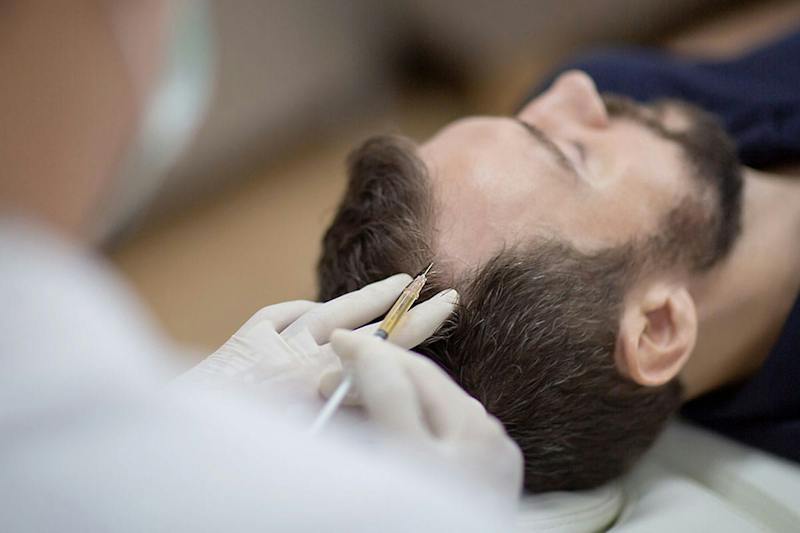
You may first notice more hair collecting in the shower, a widening part, or a hairline that no longer frames your face the way it once did. When thinning becomes increasingly visible, you might consider a hair transplant for lasting restoration or platelet-rich plasma (PRP) therapy to support healthier hair growth using your body’s natural growth factors.
In Miami, double board-certified facial plastic surgeon Anthony Bared, MD, FACS, offers both. Combining a hair transplant with PRP may provide complementary benefits by restoring hair where it has been lost while supporting transplanted follicles and existing hair.
How hair transplants and PRP work independently
Hair transplantation and PRP hair restoration address hair loss differently. A hair transplant physically relocates viable hair follicles, while PRP uses concentrated components from your own blood to support follicular health and the biological processes involved in hair growth.
Hair transplants
During a hair transplant, healthy follicles are harvested from donor areas where your hair is less likely to thin and carefully placed into areas affected by natural hair loss. Each graft is positioned according to the planned density, angle, and direction of growth.
Because transplanted follicles continue to produce hair after they become established, transplantation can provide long-term hair restoration in appropriately selected candidates. Careful hairline design is particularly important because your final results should complement your facial proportions and continue to look natural as you age.
PRP hair restoration
PRP is prepared by drawing a small amount of your blood and processing it to concentrate platelets within the plasma. These platelets contain growth factors and signaling proteins involved in tissue repair and cellular activity.
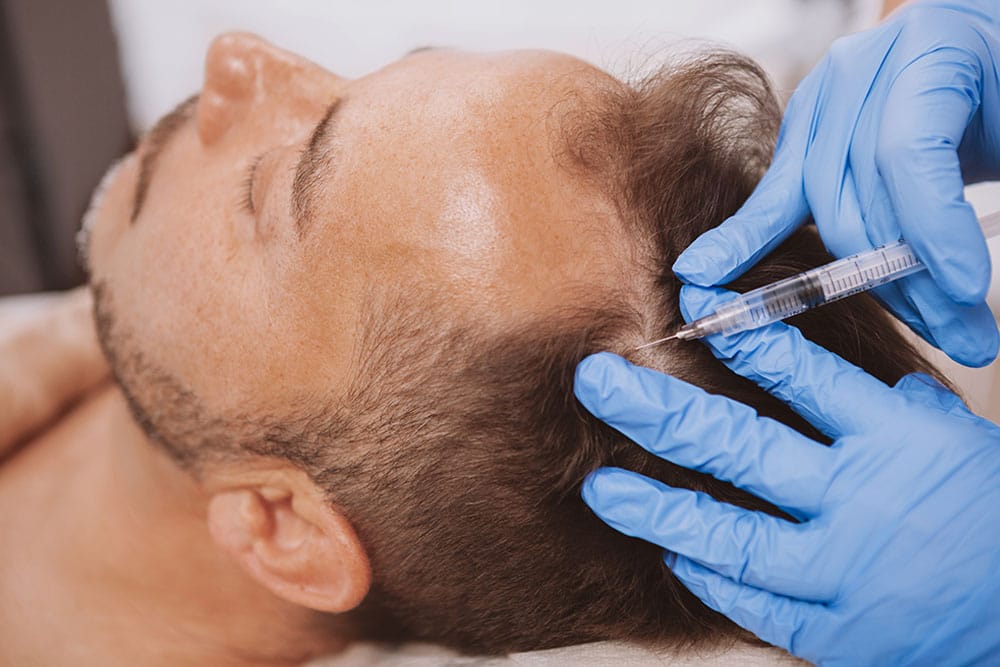
When PRP is injected into targeted areas of your scalp, these biological signals may support follicle function and encourage healthier growth in follicles that are still active. Because PRP cannot create new hair follicles where they no longer exist, it may be particularly useful for thinning areas or as a complement to transplantation.
How PRP can enhance the results of transplants
Hair transplantation creates new coverage by relocating follicles, while PRP may help optimize the environment in which those follicles recover and grow. Your treatment plan should ultimately depend on your hair-loss pattern, donor supply, and long-term restoration goals.
Supporting transplanted follicles
Hair grafts experience a period of adjustment after transplantation as they establish themselves within the recipient area. PRP contains growth factors involved in tissue repair and blood-vessel development. Using PRP around the time of transplantation may help create the biological conditions that support graft healing and follicular activity.
Promoting postoperative healing
Your scalp needs time to recover after transplantation. Because platelets play an important role in the healing response, PRP may support tissue recovery following the procedure. This complements the surgical work without replacing the normal healing process.
Encouraging earlier hair growth
Transplanted hairs commonly shed before the follicles enter a new growth cycle, so visible improvement develops gradually. Research suggests that the PRP used in hair transplantation may naturally stimulate follicular activity and potentially promote earlier growth in some patients. Your individual response and timeline can vary.
Supporting your existing hair
A successful restoration plan considers more than transplanted grafts. You may still have native hair surrounding the treated areas that is susceptible to progressive thinning. PRP may help strengthen and support follicles that remain active, potentially improving overall density while complementing your transplant.
Develop a comprehensive hair restoration plan in Miami
Combining PRP with a hair transplant allows surgical restoration and regenerative treatment to address different aspects of hair loss. However, the right strategy depends on your anatomy, pattern of thinning, donor hair, age, and future hair-loss progression.
At our Miami practice, double board-certified facial plastic surgeon and hair restoration expert Dr. Anthony Bared develops individualized plans with an emphasis on natural design. Schedule a consultation with Dr. Bared in Miami to explore your hair restoration options.